Physical Growth Dublin: Habit Change That Survives Week Three
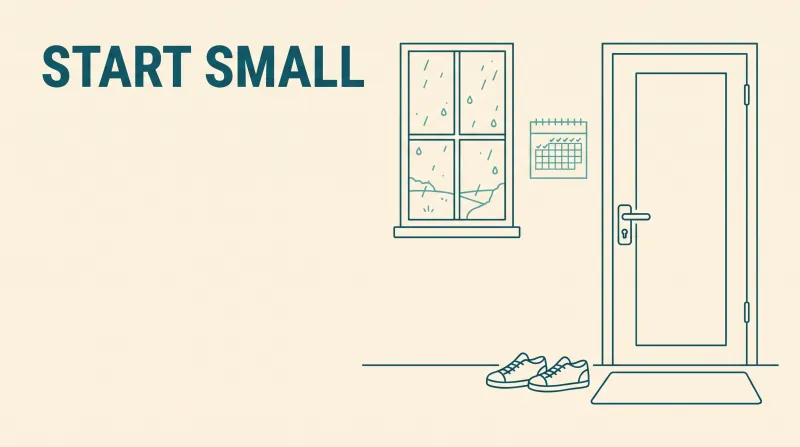
A wet Dublin morning in November is a fair test of any habit. The alarm goes, the window is grey, and the plan you made on a good Sunday suddenly looks ambitious. If physical growth in Dublin were only about enthusiasm, nobody would get through winter.
It is not about enthusiasm. It is about designing habits that still work when you do not feel like it. That is the unglamorous centre of personal growth.
Why most habits fail around week three
Week one runs on novelty. Week two runs on pride. By week three both have worn off, the results are not visible yet, and you are left with the plain fact that you have to do the thing again.
Most plans fail here because they were built for your best day. Five sessions a week, an hour each, starting at 6am. That is fine until you have a bad night's sleep, a sick child or a wet bus stop. One miss feels like the plan breaking, and the plan quits with it.
Make it embarrassingly small
The fix is to shrink the habit until it is almost silly. Put your trainers on. Walk to the end of the road. Do one set. Read one page.
This is not lowering the bar. You are separating starting from finishing. Starting is the hard part, and a two-minute version removes most of the resistance. Once you are out the door, you will usually do more than the minimum. If you don't, you still kept the habit alive, which is the point.
Plan for the bad week
Every habit meets a bad week. Illness, a deadline, a family problem, a long stretch of dark mornings. If your plan has no answer to that week, the week wins and the habit goes with it.
Decide now what the bad-week version looks like. Maybe it is five minutes of movement and nothing else. Maybe it is putting your trainers on and taking them off again. Write it down somewhere you will see it. When the bad week comes, you will not have to negotiate with yourself, because the decision is already made.
Attach it to something that already happens
New habits float. Existing routines already have a place in your day, so borrow it:
- After the kettle goes on, do five minutes of stretching.
- After you brush your teeth, put your trainers by the door.
- After you finish lunch, walk to the corner and back.
The older habit becomes the trigger. You stop deciding and just follow the sequence. Make the cue visible too. Trainers by the door beat trainers in the wardrobe, and a book on the pillow beats a book on a shelf.
Physical growth in Dublin needs a floor and a ceiling
Give every habit two versions. The ceiling is the good day: a 3km walk, a full weights session. The floor is the bad day: ten minutes outside, or one set of squats beside the bed.
On any day you are allowed to do the floor, and it counts completely. This one rule rescues more habits than any amount of motivation, because a bad day stops being a failure and becomes a smaller version of a good one.
Never miss twice
Everybody misses a day. A single miss is noise. The first miss is just a day. The second is a decision made by default, and it is the start of a new pattern. So make one rule: after a miss, the next day is the floor, no exceptions and no catching up.
Do not punish yourself with a double session. That is the plan built for your best day again, wearing different clothes.
Track it lightly, and give it time
Put a tick on a calendar. That is all the tracking most habits need. A line of ticks is quiet proof that you are someone who turns up, and it beats any lecture you could give yourself. If a tick feels like pressure, track something gentler, such as how you felt afterwards. Over a month, that note often tells you more than the streak does.
Give it longer than you think. A well-known study from University College London found it took a median of 66 days for a new daily behaviour to feel automatic, with a huge spread from 18 days to 254. Your timeline is your own. Judge the habit over months, not weeks.
That is self development in Ireland at its most practical: small, repeatable and a bit boring.
The Move step in the DRG daily protocol is a walk with the phone down, which is a ready-made floor and ceiling habit. The free app at app.dailyrebuildguide.com tracks Listen, Move and Reflect, so the calendar is done for you. Comment REBUILD on any post at @dailyrebuildguide on Instagram, follow the page, and the invite code lands in your DMs.