Emotional Growth Dublin: Name What You Feel Beyond Fine
Someone asks how you are. You say "fine." Ten minutes later you snap at a colleague over something small, or you stand in front of the fridge with no idea what you are looking for. The feeling was there the whole time. You just had no word for it.
Emotional growth in Dublin, or anywhere, often starts with that small gap: the distance between what is happening inside you and the word you reach for. Close it a little and a lot of other things get easier.
Why "Fine" and "Stressed" Do Not Do Enough
Most of us carry about three words for feelings. Fine, stressed, tired. They cover a lot of ground, which is exactly the problem. "Stressed" can mean you are afraid of a meeting, annoyed at a friend, ashamed about money, or just hungry. Each of those calls for a different next move.
When the label is vague, the response is vague too. You scroll, snack, snap, or go quiet. We have watched people repeat the same reaction for years without noticing it was aimed at the wrong problem.
Some researchers who study emotion describe this as emotional granularity: the ability to tell similar feelings apart. People who can separate "disappointed" from "embarrassed" from "worried" tend to have more options in how they respond. You do not need the theory to use the idea. You only need a slightly bigger vocabulary.
Emotional Growth Dublin Starts With the Body
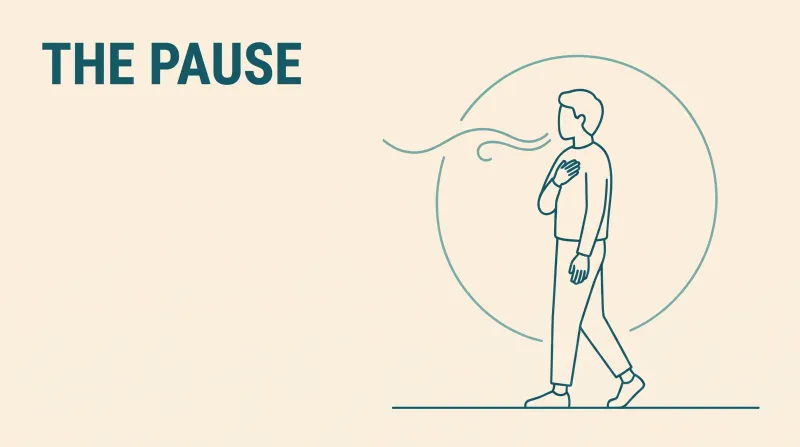
Feelings usually show up in the body before they show up in words. A tight jaw. A hollow stomach. Shoulders creeping up toward your ears. Heat in your face.
So begin there. Once or twice a day, stop for ten seconds and scan from your head down to your feet. Where is the tension? Is it sharp, heavy, buzzing, or flat? You are not analysing anything. You are collecting a description.
That description is the raw material. "Heavy in my chest" gets you closer to "sad" or "disappointed" than "I feel bad" ever will.
Build a Small Word Bank
If you are short of words, borrow some. Keep a short list on your phone and run your eye down it when you are stuck. Here is a starter set.
- Anxious, uneasy, dreading, on edge
- Resentful, irritated, overlooked, taken for granted
- Ashamed, embarrassed, exposed, small
- Lonely, left out, disconnected, missed
- Relieved, settled, proud, quietly pleased
Notice that the last line is there on purpose. Plenty of people only practise naming the hard feelings and never the good ones, which leaves half the picture blank.
Use One Sentence at the End of the Day
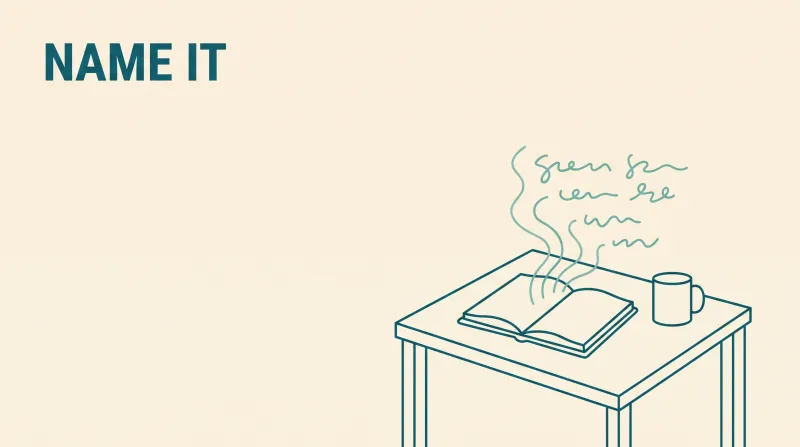
Here is a method that takes under a minute. Finish this sentence in a notebook: "Today I felt ______ when ______."
For example: "Today I felt overlooked when the meeting moved on without my idea." Or: "Today I felt relieved when I got the phone call over with." That is it. No fixing, no lecture to yourself about what you should have done.
After a couple of weeks you will start to see patterns. Maybe the same feeling lands on Sunday evenings, or after certain people, or when you skip lunch. Patterns are useful because they point to something you can change, like a routine, a conversation or a boundary.
What Naming a Feeling Does, and Does Not Do
Naming a feeling will not make it disappear, and that is not its job. What it does is give you a half second of room. You can say "I'm anxious about this" instead of being swept along as if the anxiety were simply the truth about the situation.
That room is where better choices come from. You might still say the hard thing, but you say it more calmly. You might still feel the sting, but you notice you can wait before replying.
Personal growth of any kind is slow and uneven, and the emotional kind is no exception. Some days you will name it perfectly. Other days you will say "fine" and move on, and that is normal. The practice is the returning.
A Small Step for This Week
Pick one moment you already have every day, such as the kettle boiling or the bus journey home. At that moment, ask yourself the same two questions. Where do I feel something in my body? What is the most accurate word I can find for it?
Do not aim for the right answer. Aim for a slightly better one than "fine."
If your feelings often seem too big to handle, or you are carrying something heavy, speak to your GP, or call Samaritans free on 116 123. You deserve proper support, and asking for it is a sensible move.
For daily structure while you build the habit, the free DRG daily protocol app at app.dailyrebuildguide.com gives you three steps a day: Listen, Move, Reflect. Comment REBUILD on any post at @dailyrebuildguide on Instagram and follow the page, and the invite code lands in your DMs.