

Emotional Growth Dublin: Name What You Feel Beyond Fine
Fine, stressed and tired only cover so much. Here is a one-minute daily method for finding a more accurate word for what you feel, and why it gives you room to choose your next move.
What Emotional Intelligence (EQ) Really Means
Emotional intelligence, or EQ, gets mentioned a lot, but it's easy to misread. This post explains what it is, what it's made of and how we can build it.
EQ is the ability to notice and understand our own emotions, manage them, and read the emotions of the people around us. It isn't about being calm all the time or hiding how we feel. It's about knowing what we feel and choosing what to do with it.
The term was introduced by psychologists Peter Salovey and John Mayer in 1990, and it was popularised by Daniel Goleman in the 1990s.
Goleman's model breaks EQ into five parts:
IQ describes how we handle logic and problem-solving. EQ describes how we handle feelings, ours and other people's. Someone can be very sharp and still struggle with anger, stress or relationships. EQ is a separate skill, and unlike a fixed trait, it can be developed.
Emotions drive many of our decisions, whether we notice or not. When we don't understand what we feel, we tend to react. When we can name it, we get a gap between the feeling and the response, and that gap is where better choices happen.
Strong EQ also helps in relationships and at work. People who listen well, stay steady under pressure and own their reactions are easier to trust.
Strong emotions like anger often sit on top of something else, such as hurt, fear or feeling disrespected. Asking "what's underneath this?" is one of the simplest EQ habits we can build. The first feeling is rarely the whole story.
EQ isn't a talent some people are born with and others aren't. It's a set of skills built through awareness and practice, one small moment at a time.
This week, pick one strong reaction and ask yourself what was underneath it.
Fine, stressed and tired only cover so much. Here is a one-minute daily method for finding a more accurate word for what you feel, and why it gives you room to choose your next move.
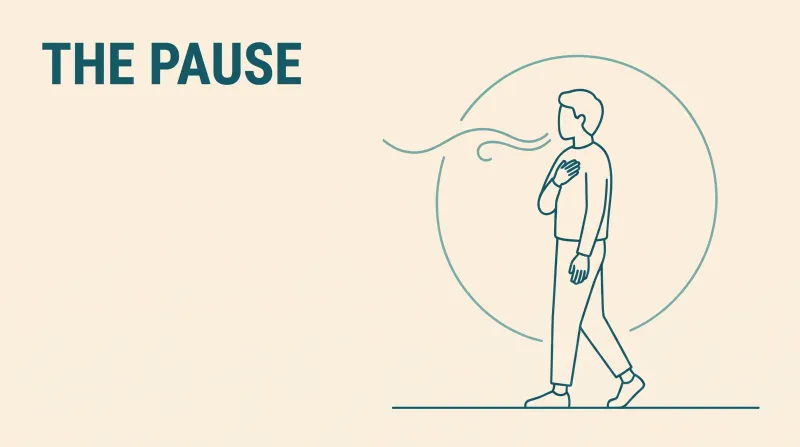
Emotional intelligence is not about feeling less. It is about getting one second of choice between a feeling and what you do next. Here is how to build that second.
Three small steps a day, tracked in the free DRG app. We post every day on Instagram and Facebook.
Get the free app