Self Development Dublin: Change the Story You Tell Yourself
Most people searching for self development in Dublin are not after a new personality. They are tired. They have tried a gym membership, a book on morning routines, maybe a podcast or two, and none of it held. Something underneath kept pulling them back to the old pattern.
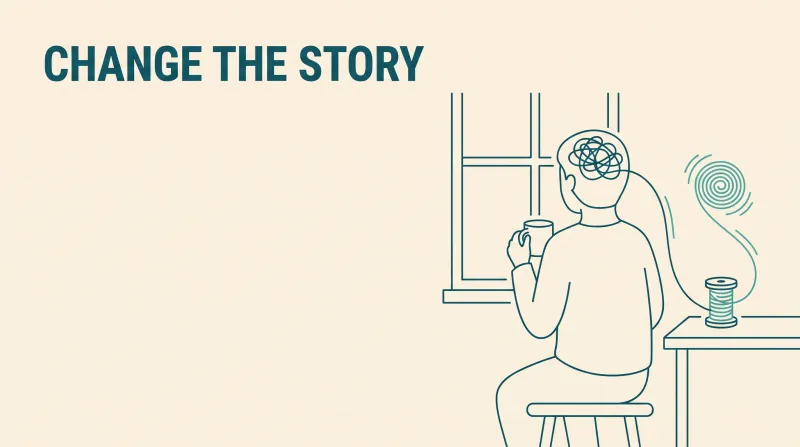
That something is usually mindset. Not the poster version with a sunrise and a quote on it. The ordinary version: the sentences you say to yourself all day without noticing.
What mindset actually is
Mindset is the set of default assumptions you carry about what is possible for you. "I'm just not a morning person." "I always lose steam by week three." "People like me don't stick with things."
None of these are facts. They are conclusions you reached at some point, usually from a handful of experiences, and then stopped questioning.
The trouble is that a conclusion you never question starts to behave like a rule. You plan around it. You pick goals small enough that it will never be tested. Then it gets confirmed again, and the rule gets stronger.
Self development in Dublin starts in your head
You can follow every plan going and still stall if your mindset is arguing with it. Personal growth is not mainly a problem of information. Most of us know roughly what we should be doing. The gap sits between knowing and doing, and that gap is filled with the stories we tell about ourselves.
So before you add anything new to your day, spend a week listening. Not fixing. Just listening.
Catch the sentences you repeat
Here is a simple way to start:
- Keep a note on your phone for seven days.
- Each time you hear a harsh or final sentence in your head ("I'll never," "I always," "what's the point"), write it down word for word.
- At the end of the week, read the list and pick the one that shows up most.
Most people are surprised by how short the list is. It is usually the same two or three sentences on repeat.
Test the story, don't fight it
Arguing with your own head rarely works. Telling yourself "I'm positive now" only starts a second argument. A better move is to question the story the way you would question a claim from a stranger.
Is this true every time, or only some of the time? When did it not hold? What would I say to a friend who told me this about themselves?
You are not trying to prove the story wrong. You are looking for one crack, because one crack is enough to make a small change believable. Believable matters more than inspiring.
Swap it for a sentence you can believe
Take "I always lose steam by week three." You will not believe "I am endlessly motivated." But you might believe "Week three is where I usually drop off, so I will plan something small for week three." That sentence is honest, and it gives you something to do.
One rule: the new sentence has to be true enough that you do not wince when you say it. If you wince, shrink it until you don't.
This is also where emotional growth begins, because noticing a story means noticing the feeling attached to it. The two arrive together. Name the feeling first and the story loses some of its grip.
Give the new sentence somewhere to live
A new sentence is gone by lunchtime if it has nowhere to go. Attach it to something you already do. Say it on the walk. Write it at the top of tonight's page. Say it once while the kettle boils.
At Daily Rebuild Guide the day is built on three plain steps: Listen, Move and Reflect. Listen is a 15-minute audio or breathwork session. Move is a walk with the phone down. Reflect is a few lines at night. Each one is a natural home for the new sentence.
When the old story pushes back
It will. The first few times you use the new sentence, the old one will answer back, usually at the worst moment: tired, behind on something, a bit low. That is normal. The old story has years of practice and the new one has days.
Do not treat a slip as proof. Treat it as information. Ask what was going on when the old sentence got loud. Hunger, lack of sleep, a hard conversation and a long day all turn it up. Knowing your triggers lets you plan around them, the same way you would plan around a wet forecast.
Expect it to feel small
Mindset work looks like nothing from the outside. No before and after photo. Some weeks you will catch one sentence and swap it once. That counts. Self development in Ireland, like anywhere else, is built from weeks like that one.
If you want a daily structure to hang this on, the free DRG app at app.dailyrebuildguide.com holds the Listen, Move and Reflect steps in one place. Comment REBUILD on any post at @dailyrebuildguide on Instagram, follow the page, and the invite code lands in your DMs.